Astro Blog Themes
Fast, readable Astro blog themes for personal blogs, multi-author publications, and news sites. Each one ships an MDX-powered blog with a fully designed single-post layout, ready for your first article.

Need more than one? The All Access Pass includes every Astro theme, plus every future release, for a single payment.
What to look for in an Astro blog theme
A blog theme lives or dies on the reading experience and on how easy it is to publish the next post. Before picking one, check for:
- Markdown and MDX posts: write in plain files, and drop components like callouts or video embeds into a post when you need them.
- Taxonomies: tags, categories, or topics give readers a way to browse and give search engines more pages to index.
- Search: once you pass a few dozen posts, readers expect to search instead of scroll.
- RSS: still the easiest way for readers and aggregators to follow a blog.
- Typography and layout: comfortable line length, clear headings, and good code-block styling if you write about technical topics.
- Performance: an Astro blog should load fast. Check the Lighthouse scores listed on each theme page.
Which Astro blog theme should you pick?
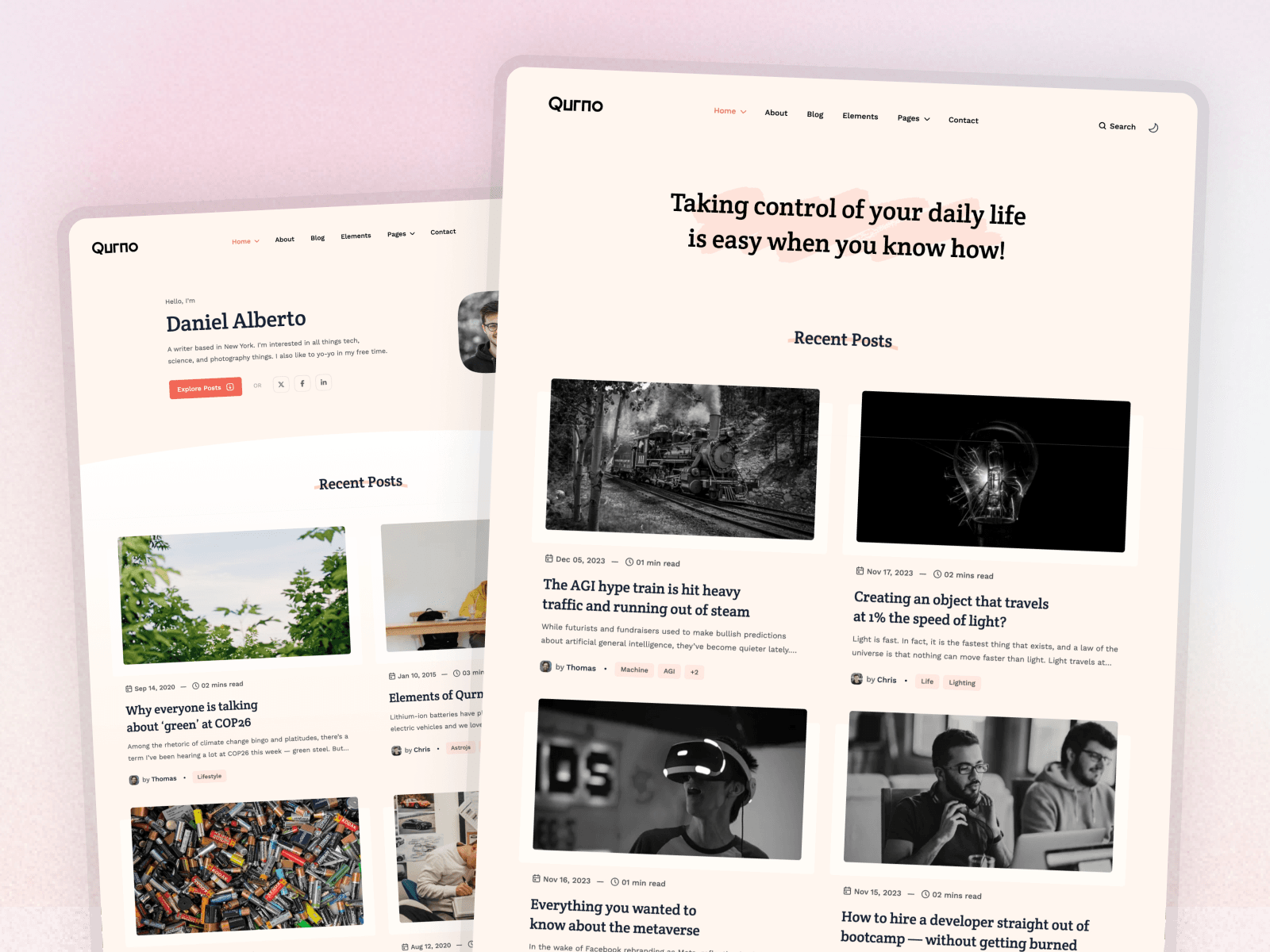
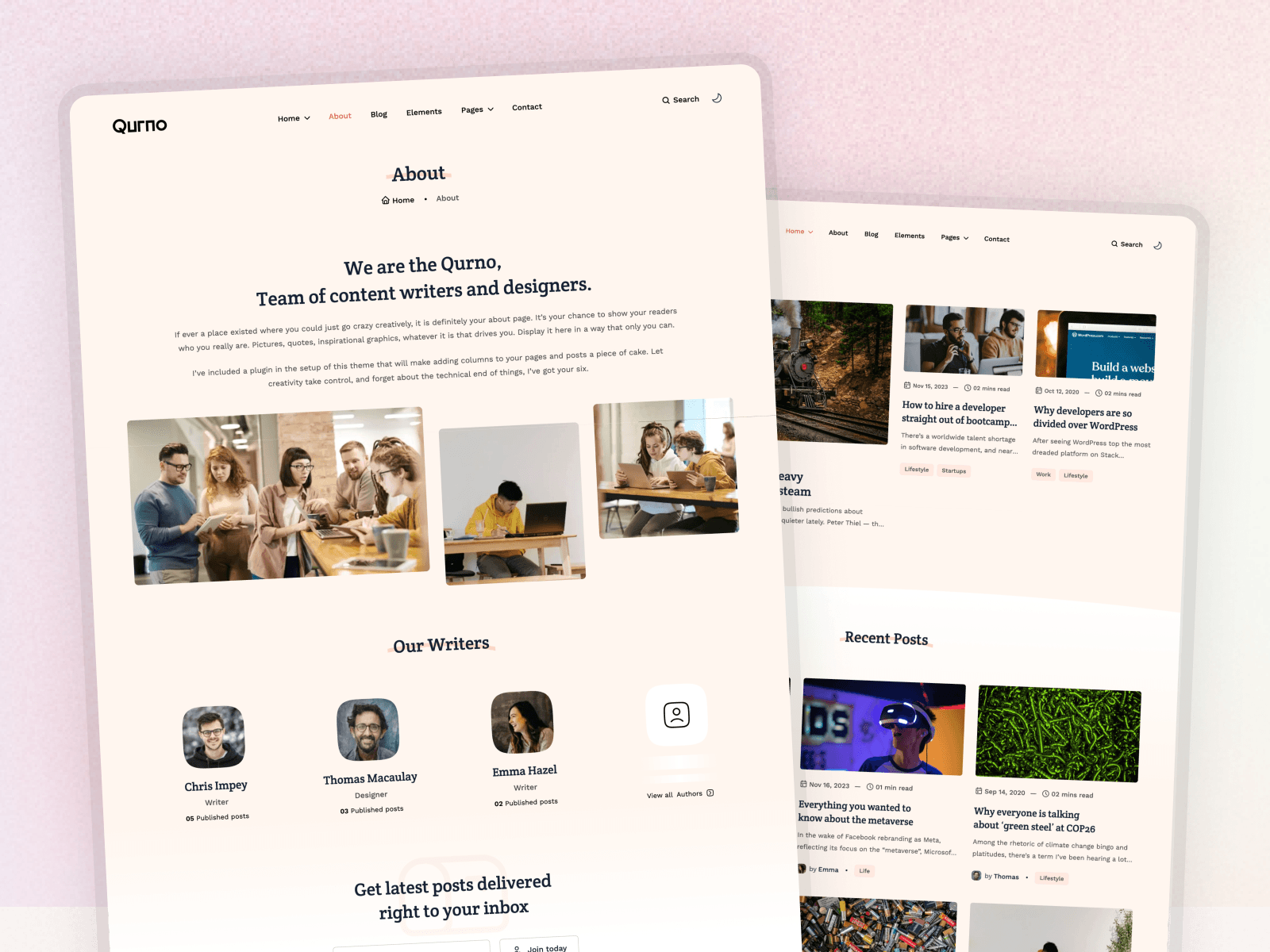
- Qurno: a minimal, multipurpose blog with three homepage layouts, a dark and light mode switcher, interactive search, tags, categories, a yearly archive, a Mailchimp newsletter form, and a ready-to-use TinaCMS config. A good default for personal blogs and small publications.
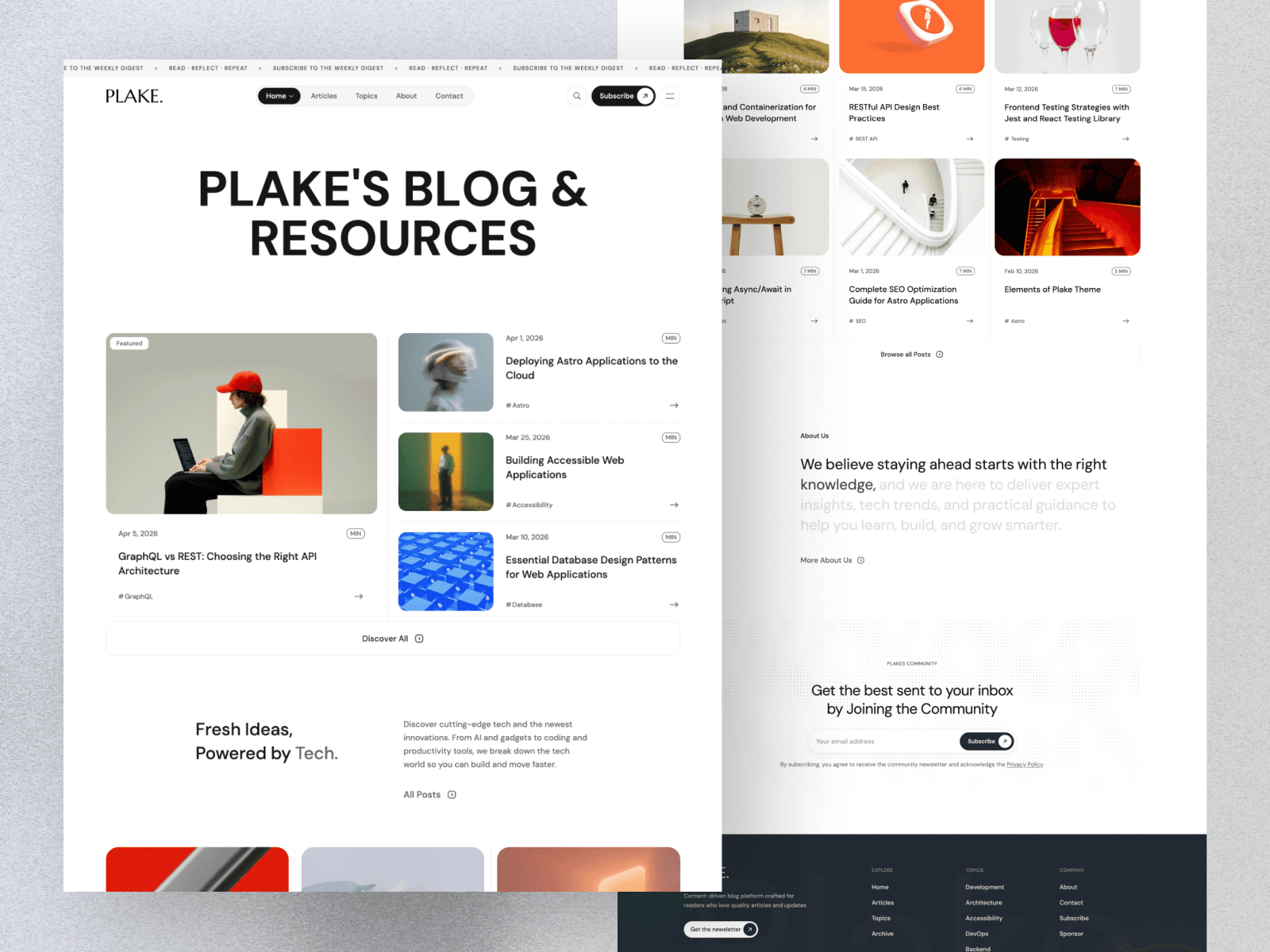
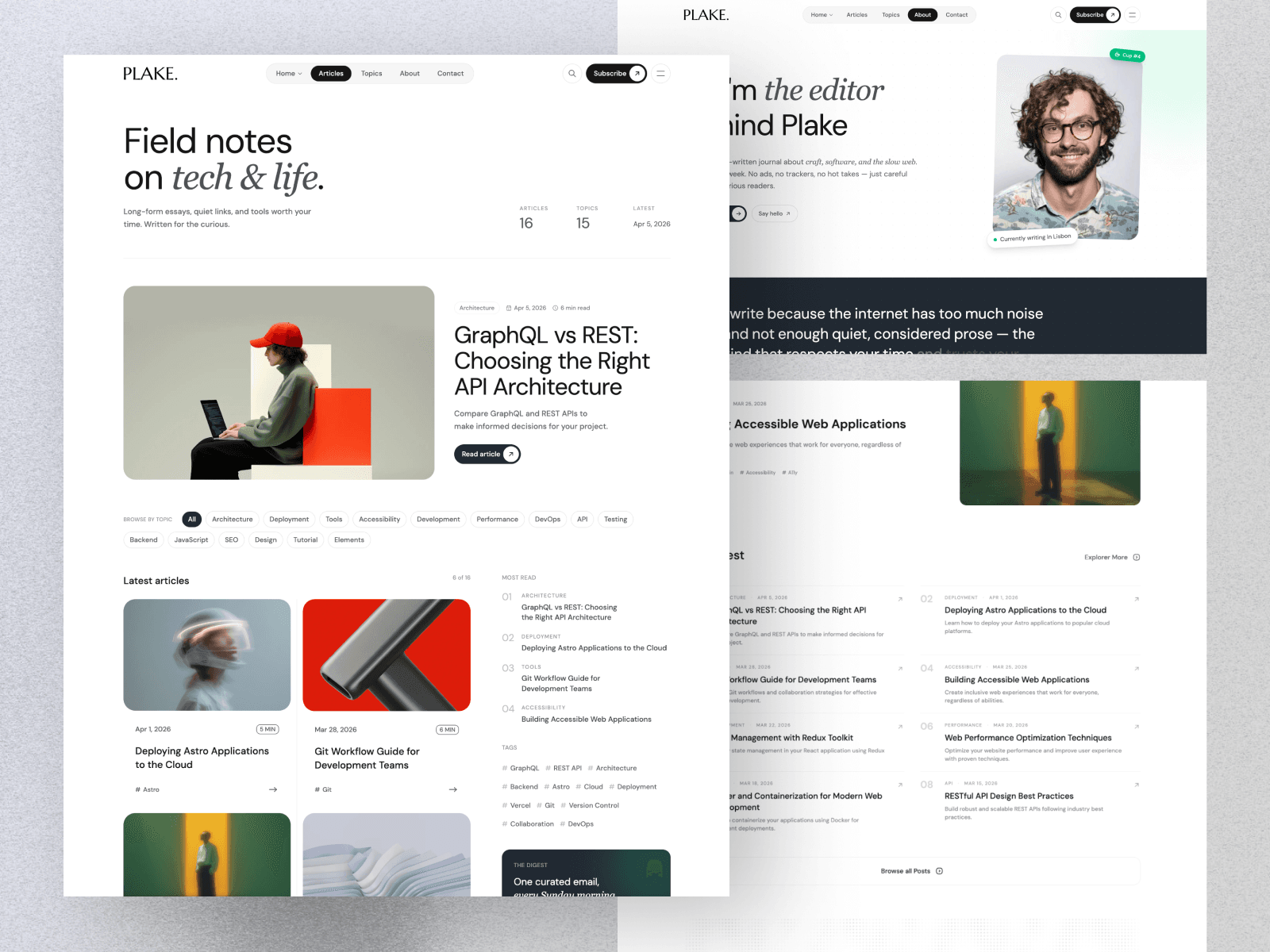
- Plake: built for news and editorial sites. Two homepage styles, topic and tag taxonomies, an archive page, a search modal, reading time on every article, a marquee announcement bar, and an auto-generated RSS feed.
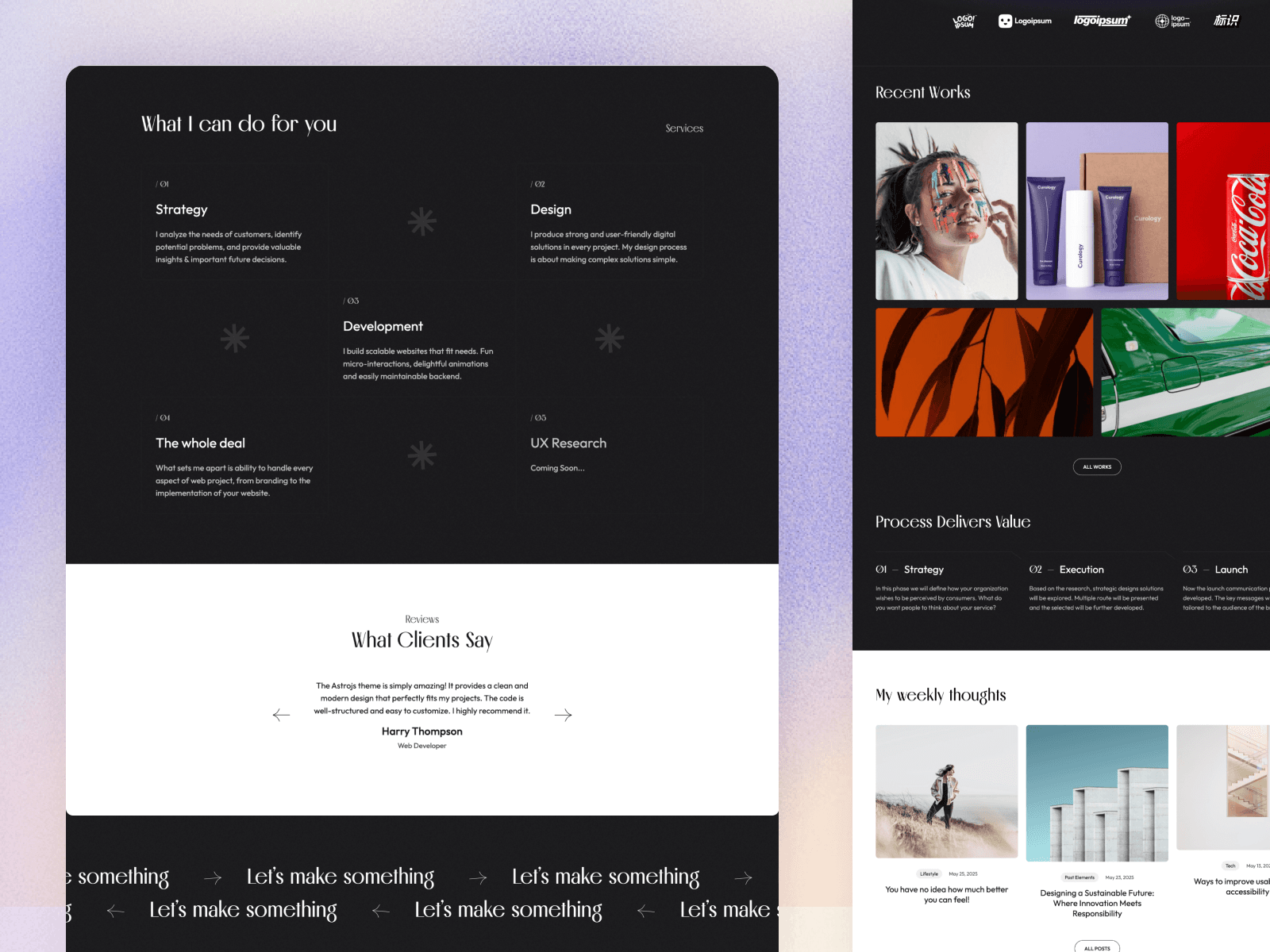
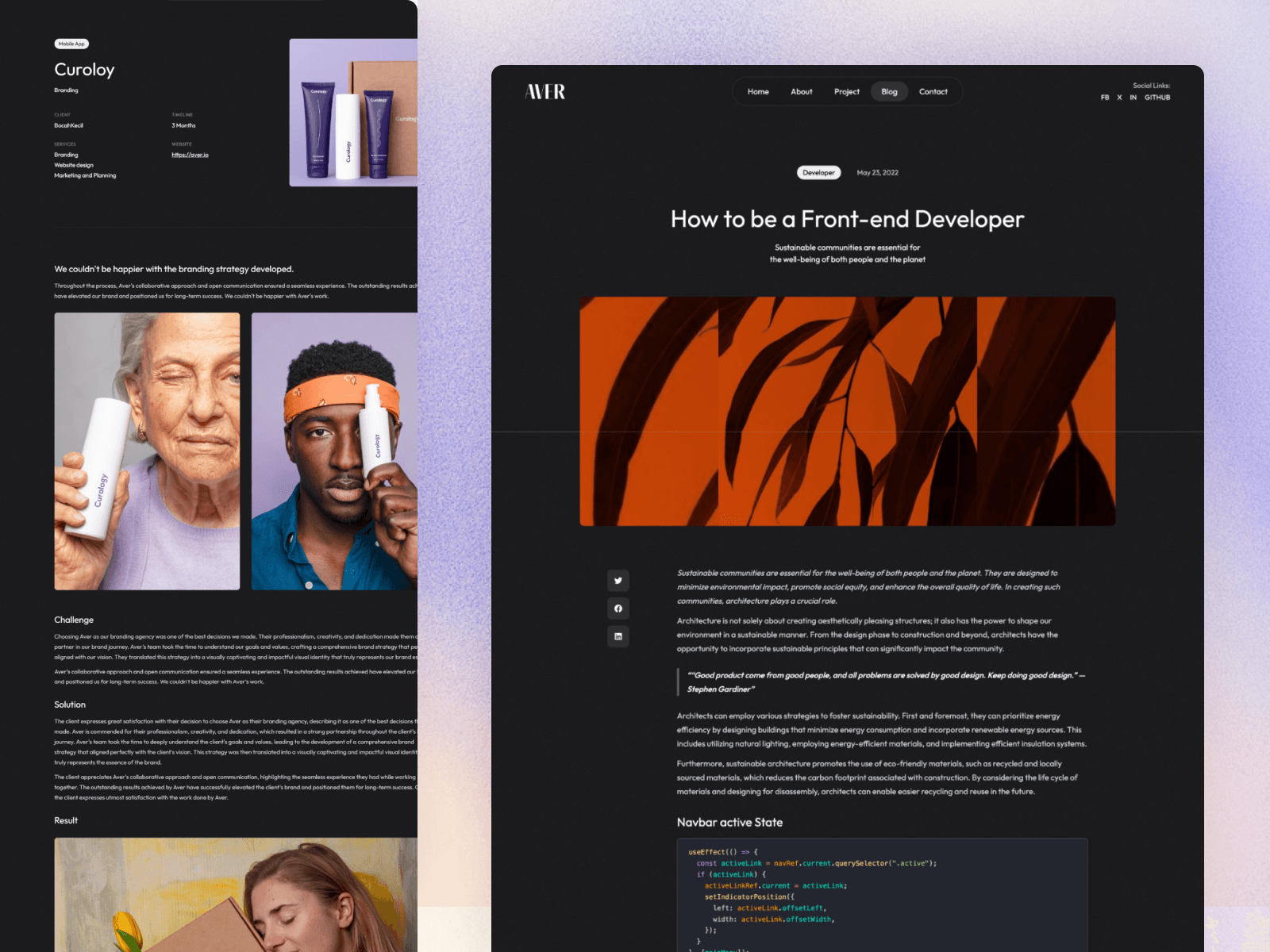
- Aver: a portfolio-first theme with a full blog. Pick it if your projects matter as much as your writing and you like a dark and light mixed design.
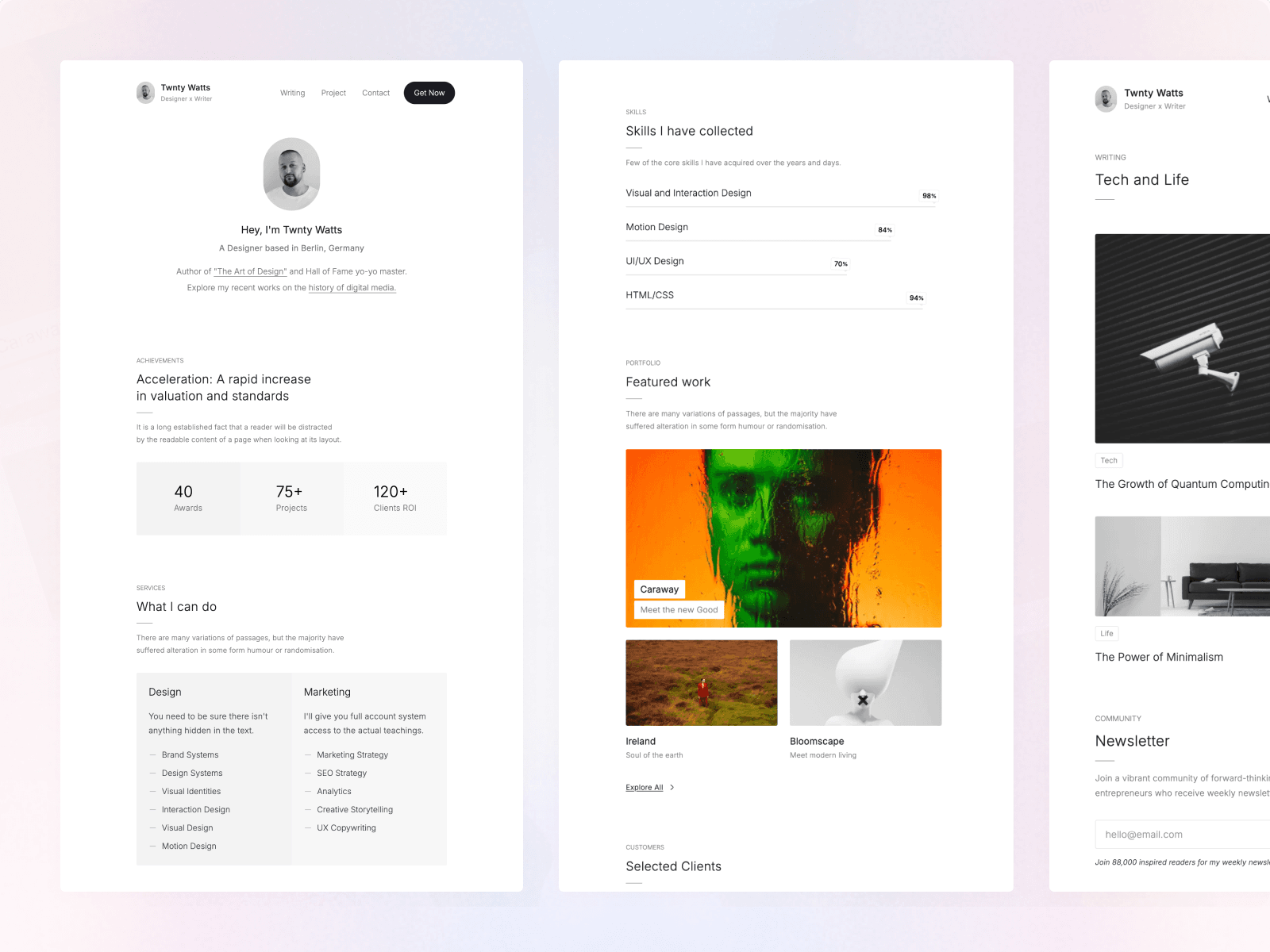
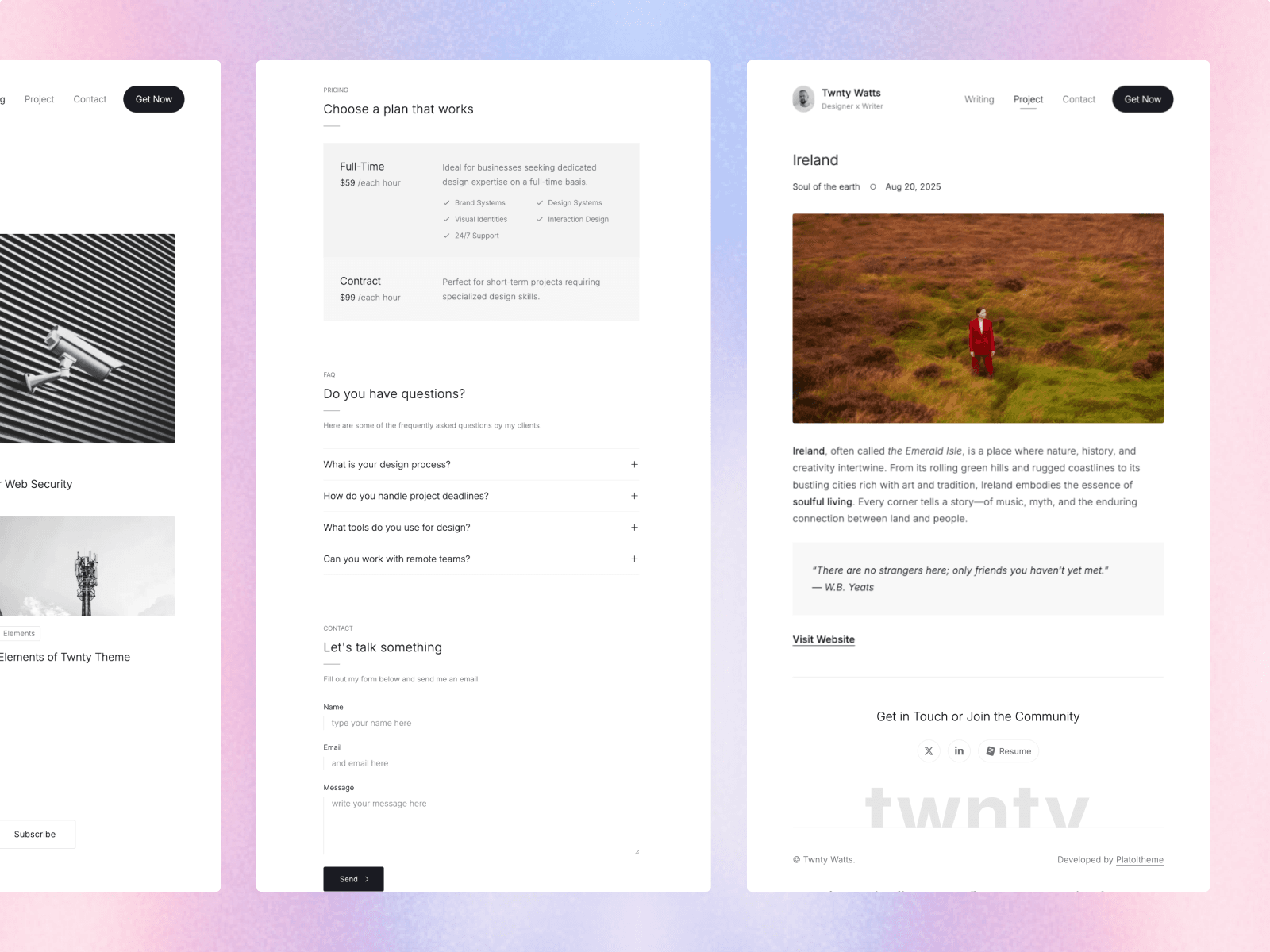
- Twnty: a resume and CV theme with a built-in blog. Pick it if the blog supports a personal brand or job search rather than being the main product.
For a deeper side-by-side comparison, read our guide to the best Astro blog themes.
Launching your blog
Every theme comes with a step-by-step setup guide in the documentation. Most people go from download to a live blog in an afternoon: install dependencies, replace the sample posts with your own, update the site settings, and deploy to a static host such as Vercel, Netlify, or Cloudflare.
·Related guides
Best Astro Blog Themes for 2026: Compared
The best Astro blog themes for 2026 compared: features, taxonomies, search, RSS, CMS support, and pricing for personal blogs, magazines, and news sites.
Best CMS for Astro in 2026: Git-Based vs Headless
Which CMS should you use with Astro? Compare Markdown in Git, TinaCMS, Keystatic, Decap CMS, Sanity, Storyblok, Contentful, Strapi, and headless WordPress.
Astro vs WordPress in 2026: Which Is Right for You?
Astro vs WordPress compared on speed, security, SEO, cost, editing, and plugins, with clear advice on when to switch and how to migrate a WordPress site.
Astro SEO: The Complete Guide for 2026
A practical Astro SEO guide: meta tags, canonical URLs, sitemaps, robots.txt, JSON-LD structured data, images, fonts, redirects, and Core Web Vitals, with code.
Frequently asked questions
What is the best Astro blog theme?
Is Astro good for blogging?
Can I edit blog posts without touching code?
Can I move my WordPress blog to an Astro theme?