Best Astro Blog Themes for 2026: Compared
The best Astro blog themes for 2026 compared: features, taxonomies, search, RSS, CMS support, and pricing for personal blogs, magazines, and news sites.
In this guide
- Introduction
- What Makes a Great Astro Blog Theme
- 1. Qurno — Best Multipurpose Blog Theme
- 2. Plake — Best News & Editorial Theme
- 3. Aver — Best Blog for Creatives
- 4. Twnty — Best Blog for a Personal Brand
- 5. AstroPaper — Best Free Minimal Blog
- 6. Astro's Official Blog Starter — Best Blank Slate
- Astro Blog Theme Comparison Table
- How to Choose
- Moving From WordPress to Astro
- SEO Tips for Your Astro Blog
- Frequently Asked Questions
- Conclusion
Introduction
Astro was built for content sites, and blogs are where it shines. Posts are plain Markdown or MDX files, pages are rendered to static HTML at build time, and readers get a fast page with little or no JavaScript. That combination is hard to beat for both reading experience and SEO.
The framework does not give you a design, though. A good blog theme hands you the homepage, post layout, taxonomies, search, RSS, and typography already polished, so you can start writing on day one. This guide compares the best Astro blog themes for 2026, from multipurpose personal blogs to high-volume news sites, plus free options if you are on a budget.
New to the framework? Start with our beginner's guide to Astro. Looking beyond blogs? See the full roundup of the best Astro themes for 2026.
What Makes a Great Astro Blog Theme
Use this checklist when you compare themes:
- MDX and Markdown posts: write in plain files, and drop components such as callouts, video embeds, or tables into a post when you need them.
- Taxonomies: tags, categories, or topics help readers browse and give search engines more pages to index.
- Search: once you pass a few dozen posts, readers expect to search.
- RSS feed: still the easiest way for readers, newsletters, and aggregators to follow you.
- Reading experience: comfortable line length, a clear heading hierarchy, readable code blocks, and estimated reading time.
- Performance: an Astro blog should score in the high 90s on Lighthouse. Check the real scores on each theme page.
- Active maintenance: the theme should run on the current Astro major version. Every theme in this list runs on Astro v7.
1. Qurno — Best Multipurpose Blog Theme
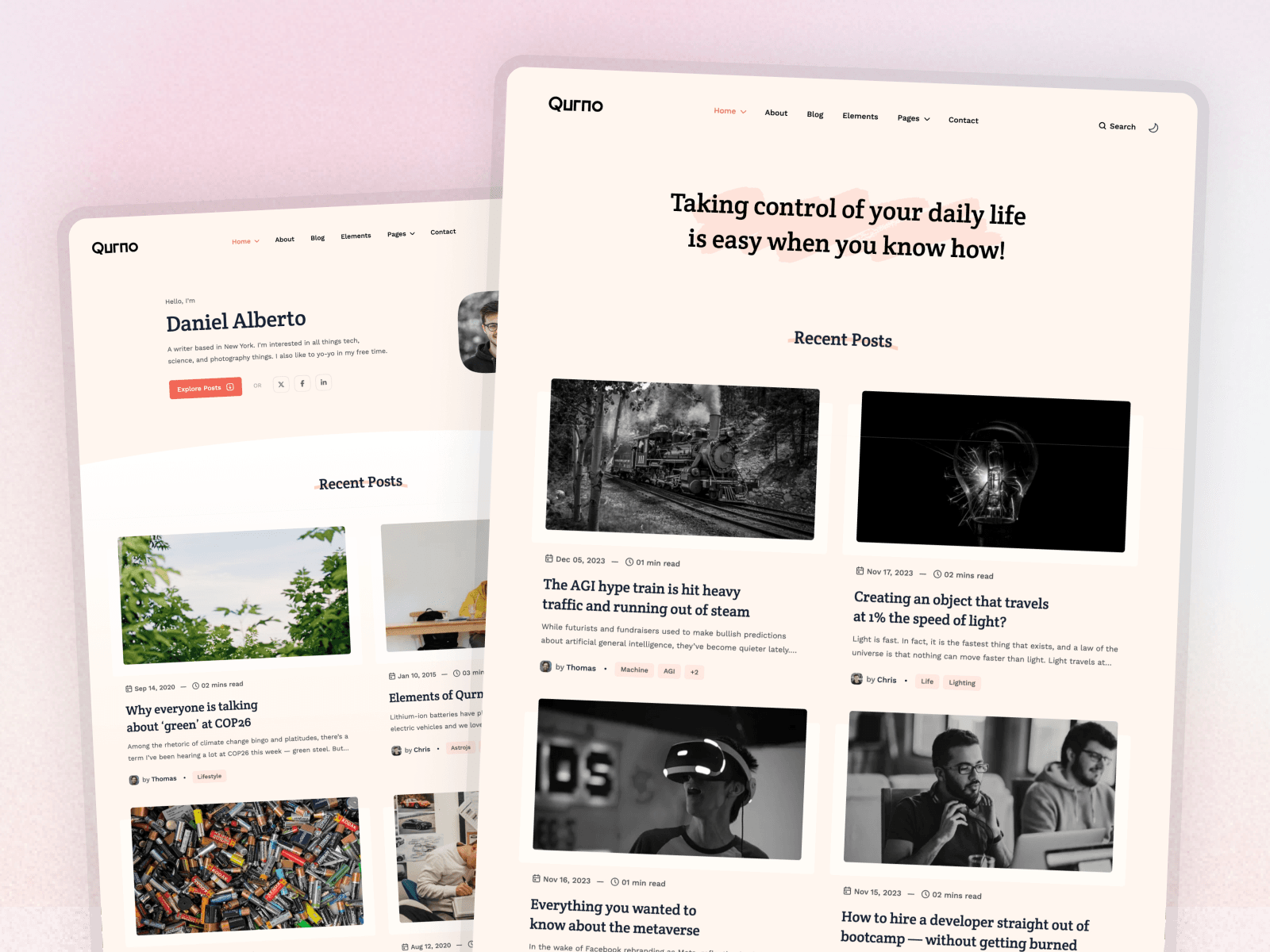
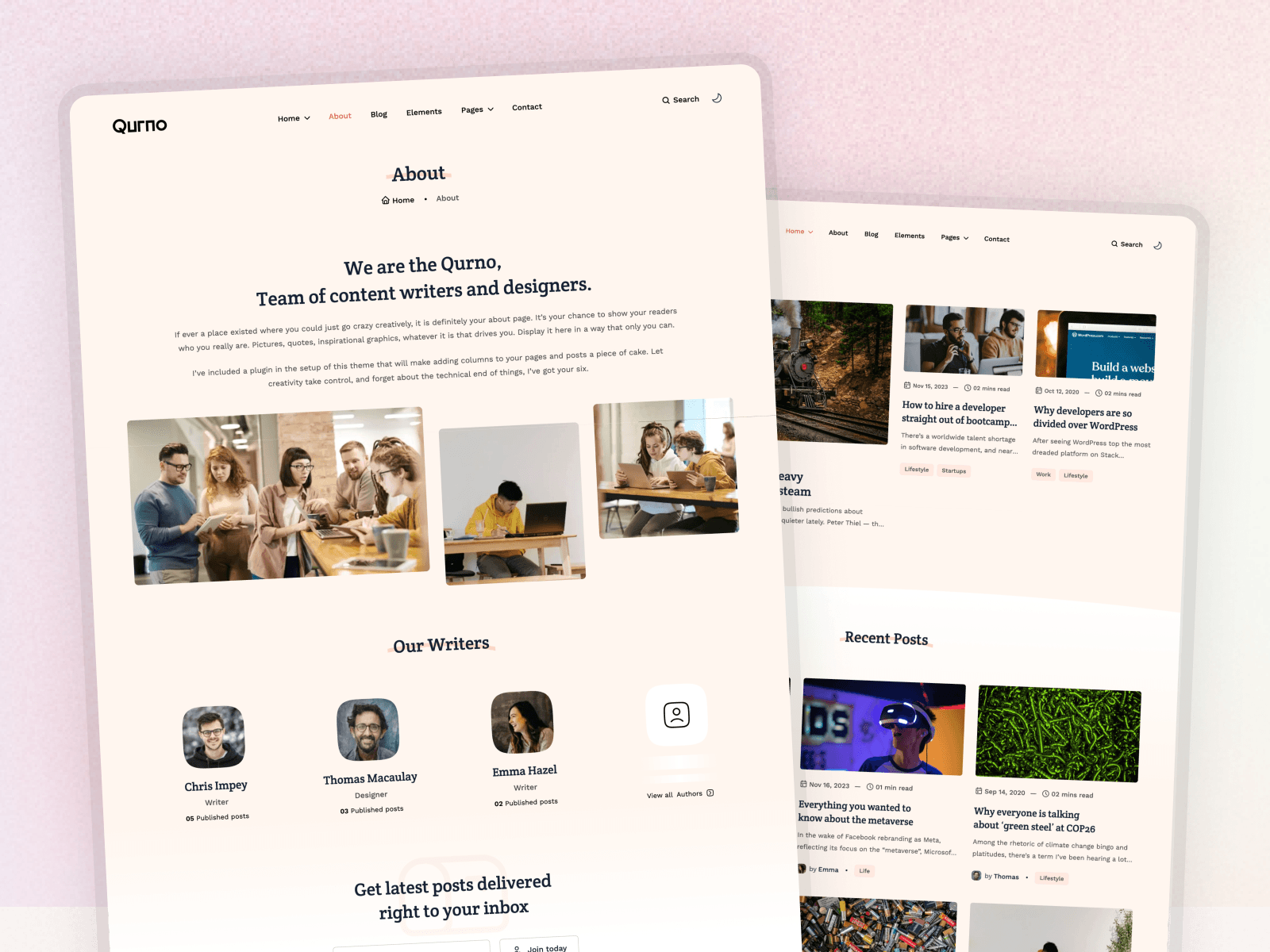
Qurno is a minimal, feature-rich blog theme for personal blogs and small publications. It has the most complete feature set in this list, and it ships with a ready-to-use TinaCMS config if you prefer editing posts in a visual editor. Built on Astro v7 and Tailwind CSS v4. Price: from $99 (single site) or $129 (unlimited sites).
Highlights:
- Three homepage layouts, including a personal homepage
- Dark and light mode switcher
- Interactive blog search
- Tags and categories with filtering, plus a yearly archive
- Author pages and an RSS feed
- Mailchimp newsletter form and a contact form that works with Formspree and similar services
- YouTube, Vimeo, and self-hosted video, plus image galleries with zoom preview
- Adjustable number of post columns per row
- Google PageSpeed (desktop): 100 / 96 / 100 / 100
Best for: Personal bloggers, indie writers, and small publications that want a polished site with every common blog feature already built.
2. Plake — Best News & Editorial Theme
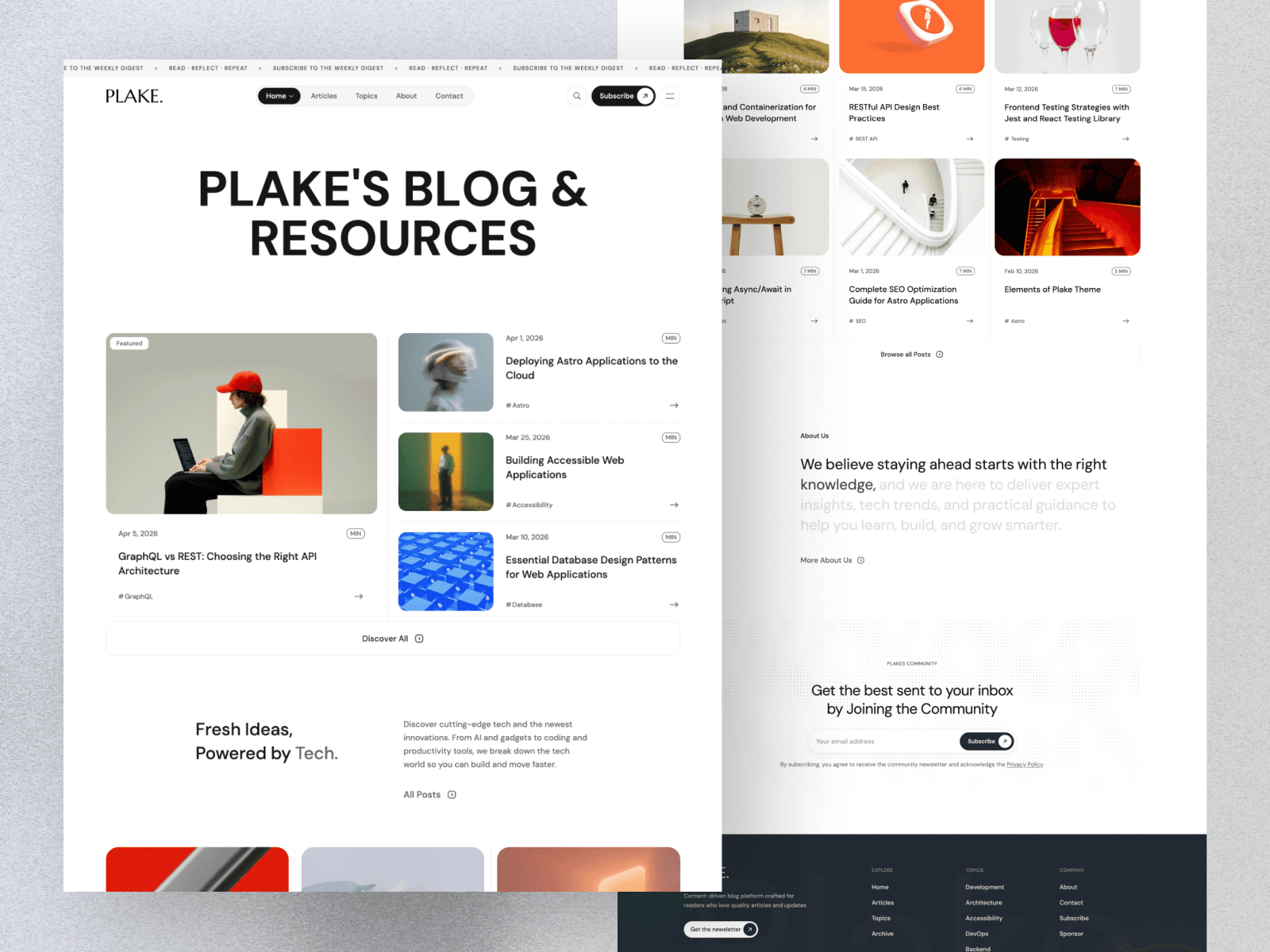
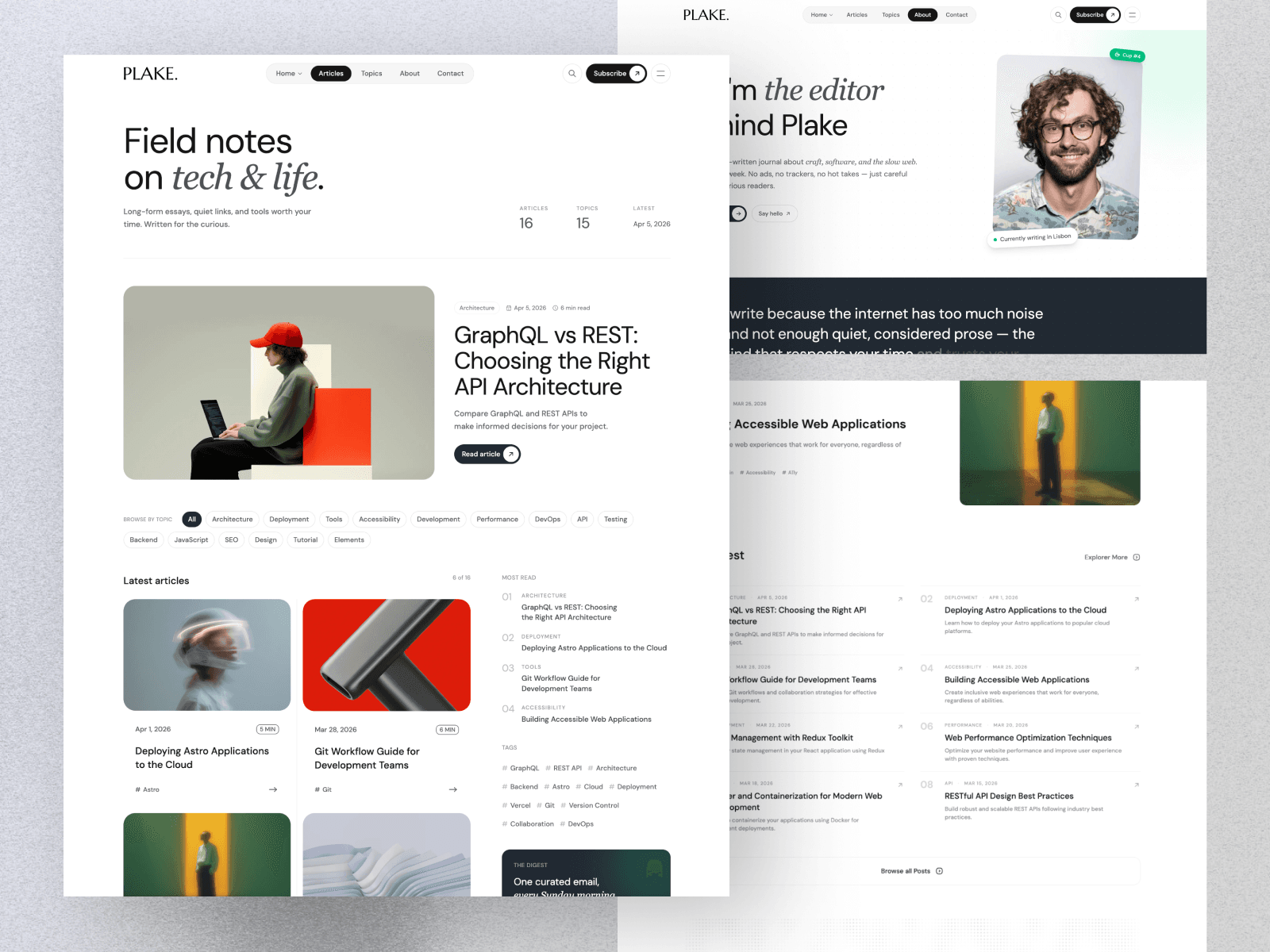
Plake is a content-driven theme designed for sites that publish a lot. Topic and tag taxonomies keep a large archive organized, and the layout puts readability first. Built on Astro v7 and Tailwind CSS v4. Price: from $79 (single site) or $129 (unlimited sites).
Highlights:
- Two homepage styles
- Topic and tag taxonomies, plus a dedicated archive page
- Built-in search modal
- Estimated reading time on every article
- Sticky header with a marquee announcement bar
- Subscribe and Sponsor pages for growing an audience
- Auto-generated RSS feed
- Smooth scroll animations powered by Motion
- Google PageSpeed (desktop): 99 / 94 / 96 / 100
Best for: News sites, magazines, newsletters, and editorial teams that need to organize hundreds of articles.
3. Aver — Best Blog for Creatives
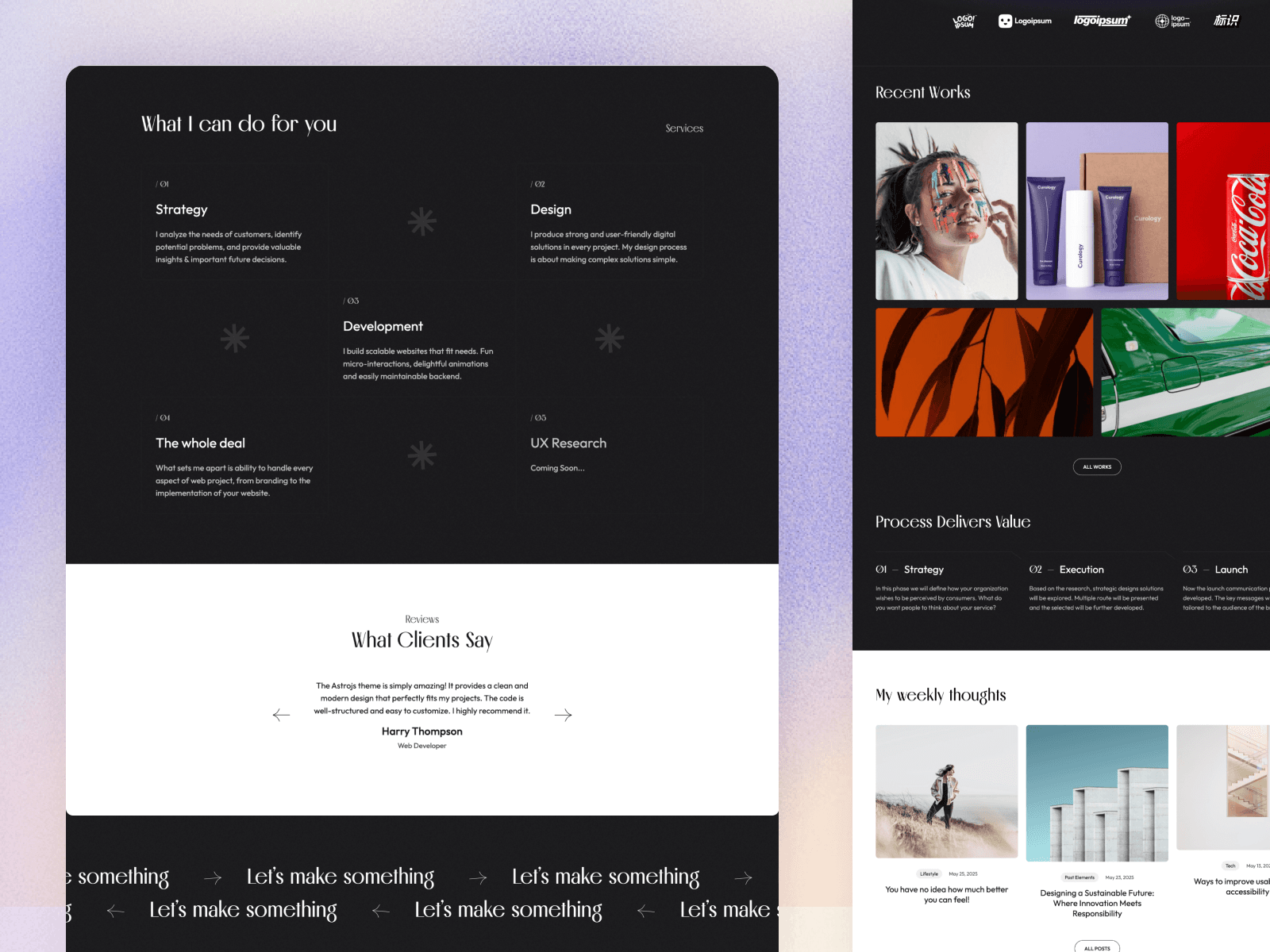
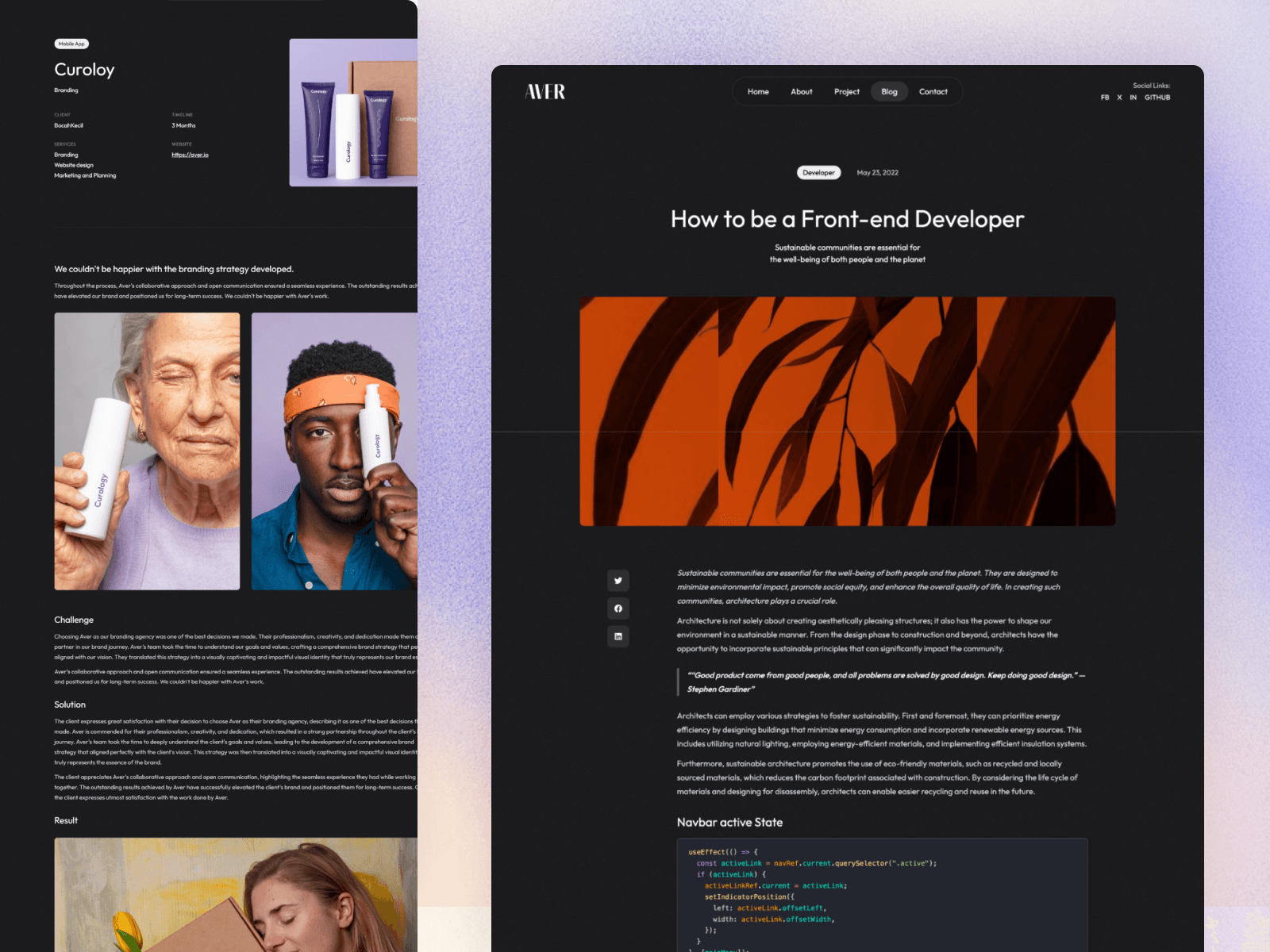
Aver is a portfolio and blog theme in one. If your writing sits next to your projects, for example design case studies, photography, or dev write-ups, Aver gives both equal weight. Built on Astro v7 and Tailwind CSS v4. Price: $59, the most affordable premium pick here.
Highlights:
- Full blog system with a detailed single-post page and next and previous navigation
- Animated project previews with dedicated project pages
- Dark and light mixed design
- Pagination for both posts and projects
- Share buttons, code blocks, blockquotes, and video embeds in posts
- TinaCMS support
- AJAX contact form
- Google PageSpeed (desktop): 99 / 100 / 100 / 100
Best for: Designers, photographers, and creative developers who blog about their work. See more Astro portfolio themes.
4. Twnty — Best Blog for a Personal Brand
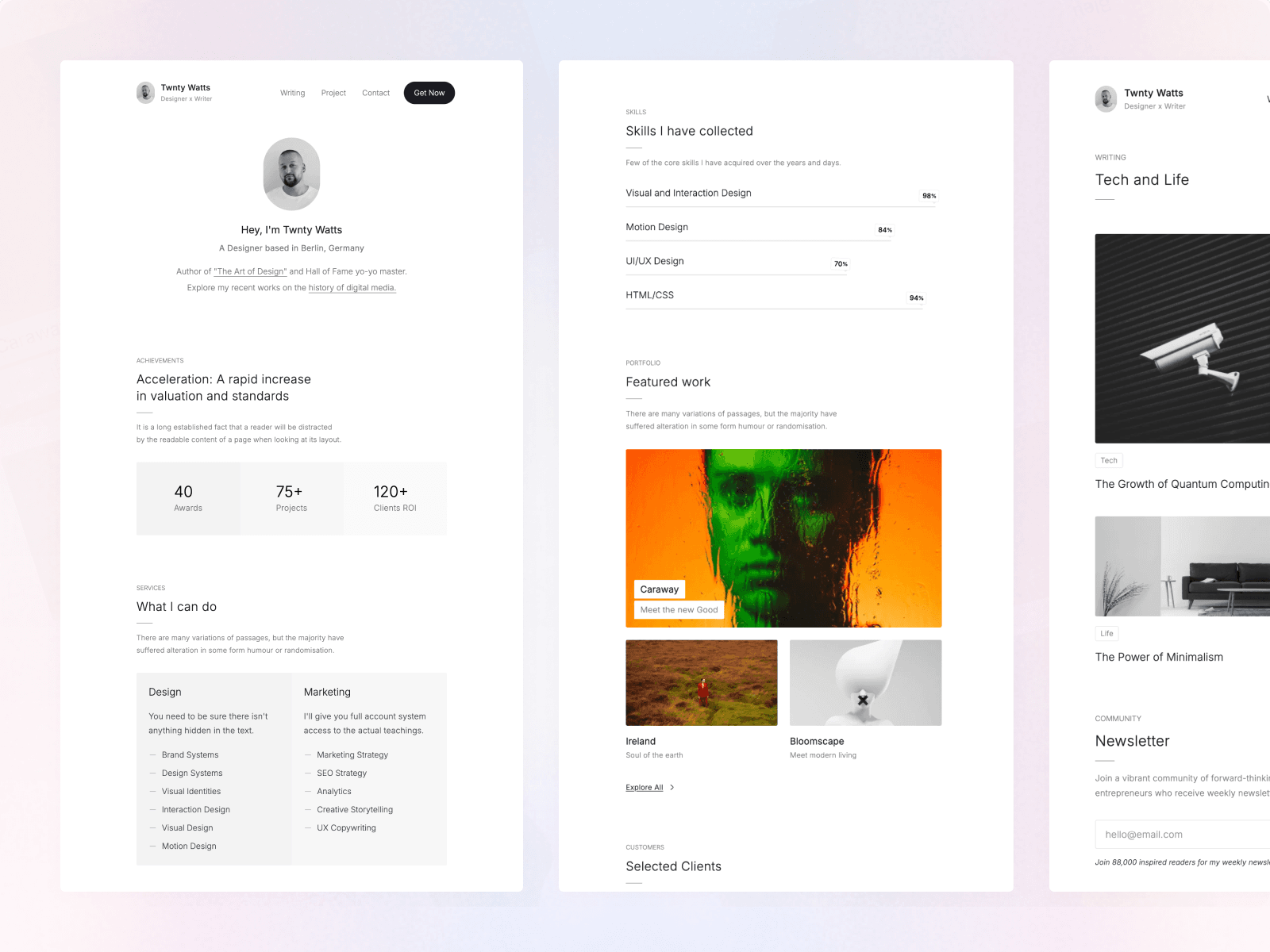
Twnty is a resume and CV theme with a full blog built in. It is the right choice when your blog supports a personal brand, job search, or consulting business rather than being the main product. Built on Astro v7 and Tailwind CSS v4. Price: $79.
Highlights:
- 13 sections including Intro, Experience, Skills, Services, Testimonials, Projects, Pricing, and FAQ
- MDX and Markdown blog with a detailed single-post page
- Projects with dedicated pages and next and previous navigation
- Pagination for posts and projects
- AJAX contact form
- Google PageSpeed (desktop): 100 / 96 / 100 / 100
Best for: Freelancers, consultants, and developers who want their blog and CV on the same domain. See more Astro resume themes.
5. AstroPaper — Best Free Minimal Blog
AstroPaper is a popular open-source Astro blog theme. It is minimal, accessible, and includes search and a dark mode toggle. It is a solid choice if you want a free, no-frills personal blog and do not mind doing your own design work.
6. Astro's Official Blog Starter — Best Blank Slate
Running npm create astro@latest -- --template blog gives you Astro's own minimal blog: a post list, post pages, an RSS feed, and a sitemap. It is the fastest way to learn how an Astro blog is put together, but you will design everything else yourself.
Astro Blog Theme Comparison Table
| Theme | Best for | Homepages | Taxonomies | Search | RSS | CMS | Price |
|---|---|---|---|---|---|---|---|
| Qurno | Personal blog / publication | 3 | Tags, categories, archive | ✅ | ✅ | TinaCMS | from $99 |
| Plake | News / editorial | 2 | Topics, tags, archive | ✅ | ✅ | — | from $79 |
| Aver | Creative blog + portfolio | 1 | — | — | — | TinaCMS | $59 |
| Twnty | Personal brand + CV | 1 | — | — | — | — | $79 |
| AstroPaper | Free minimal blog | 1 | Tags | ✅ | ✅ | — | Free |
| Astro blog starter | Learning / blank slate | 1 | — | — | ✅ | — | Free |
A dash means the feature is not a headline feature of the theme, not that it cannot be added.
How to Choose
Ask yourself three questions:
- How much will you publish? A few posts a month works with any theme. If you plan to publish daily, or have several authors, choose a theme with strong taxonomies, an archive, and search, such as Plake or Qurno.
- Is the blog the product, or does it support something else? If the blog is the product, pick a dedicated blog theme. If it supports a portfolio or a CV, Aver or Twnty will serve you better.
- Who edits the content? Developers are happy editing Markdown in Git. If non-technical writers need a visual editor, pick a theme with TinaCMS support like Qurno or Aver, or see our guide to the best CMS for Astro.
Still unsure? Every theme has a live preview, so click through the real thing before you buy. You can also browse every Astro blog theme side by side.
Moving From WordPress to Astro
Many Astro bloggers come from WordPress (see our full Astro vs WordPress comparison). The move is simpler than it sounds:
- Export your posts from WordPress and convert them to Markdown with one of the available export tools.
- Copy the Markdown files into your theme's blog content folder and map the frontmatter fields (title, date, description, image, tags) to the theme's schema.
- Keep your existing URL slugs, or set up redirects from the old URLs, so you do not lose search rankings.
- Download your media library and update image paths.
- Deploy, then submit your new sitemap in Google Search Console.
Our guide to deploying an Astro site covers the last step on Vercel, Netlify, and Cloudflare.
SEO Tips for Your Astro Blog
For the full technical checklist, read our Astro SEO guide. The essentials:
- Write a unique title and meta description for every post. Keep titles under 60 characters with the main keyword near the start.
- Link between your posts. Internal links help readers find related content and help search engines understand your topics.
- Use descriptive image alt text and serve images through
astro:assetsso they are resized and converted to modern formats. - Publish an RSS feed and a sitemap, and submit the sitemap in Google Search Console.
- Update your best posts. Refreshing a post with new information, and bumping its updated date, often lifts it in search results.
Frequently Asked Questions
What is the best Astro blog theme in 2026?
For most personal blogs and small publications, Qurno is the most complete option, with three homepage layouts, interactive search, tags, categories, a yearly archive, a newsletter form, and a ready-to-use TinaCMS config. For a news or editorial site that publishes often, Plake is the better fit.
Is there a free Astro blog theme?
Yes. AstroPaper is a popular open-source Astro blog theme, and Astro's own blog starter (npm create astro@latest -- --template blog) gives you a minimal working blog. Both are good starting points if you are happy to do your own design work.
Can I use a CMS with an Astro blog theme?
Yes. Qurno ships a ready-to-use TinaCMS config and Aver supports TinaCMS too. Any Astro blog can also pull content from a headless CMS such as Sanity, Contentful, Storyblok, or Decap CMS.
Is Astro better than WordPress for a blog?
For speed, security, and hosting cost, usually yes: Astro outputs static HTML with no database or PHP to maintain, and it can be hosted for free on platforms like Vercel, Netlify, and Cloudflare. WordPress is still easier if non-technical editors need a full admin panel with plugins.
Do Astro blog themes support RSS?
Most do. Qurno and Plake include an RSS feed out of the box, and you can add one to any Astro site with the official @astrojs/rss package.
Conclusion
The right Astro blog theme depends on what you publish. For a polished, multipurpose blog with every feature built in, pick Qurno. For a news or editorial site, pick Plake. If your blog sits next to a portfolio or CV, Aver and Twnty give your work and your writing equal space.
Whichever you choose, you will get a fast, SEO-friendly blog on Astro v7. Want all four? The All Access Pass includes every theme, plus future releases, for one payment.